Your cart is currently empty.
Beyond PLA: Why Fashion Filaments Matter
The future of fashion is not only shaped by designers.
It is also shaped by materials.
As 3D printing continues to enter the world of fashion, most conversations focus on forms, silhouettes, or technology itself. Yet behind every printed accessory or wearable object lies a crucial element: the filament.
Just as traditional fashion relies on fabrics such as silk, cotton, wool, or leather, 3D fashion depends on materials that determine how an object feels, moves, performs, and ages.
But what exactly are fashion filaments — and why do they matter?
What Is a Filament?
A filament is the material used by a 3D printer to build an object layer by layer.
Different filaments offer different properties:
- flexibility
- strength
- texture
- transparency
- durability
- sustainability
The choice of filament influences not only the final appearance of a piece but also its comfort and wearability.
In many ways, selecting a filament is similar to selecting a fabric.
The Most Common Fashion Filaments
PLA
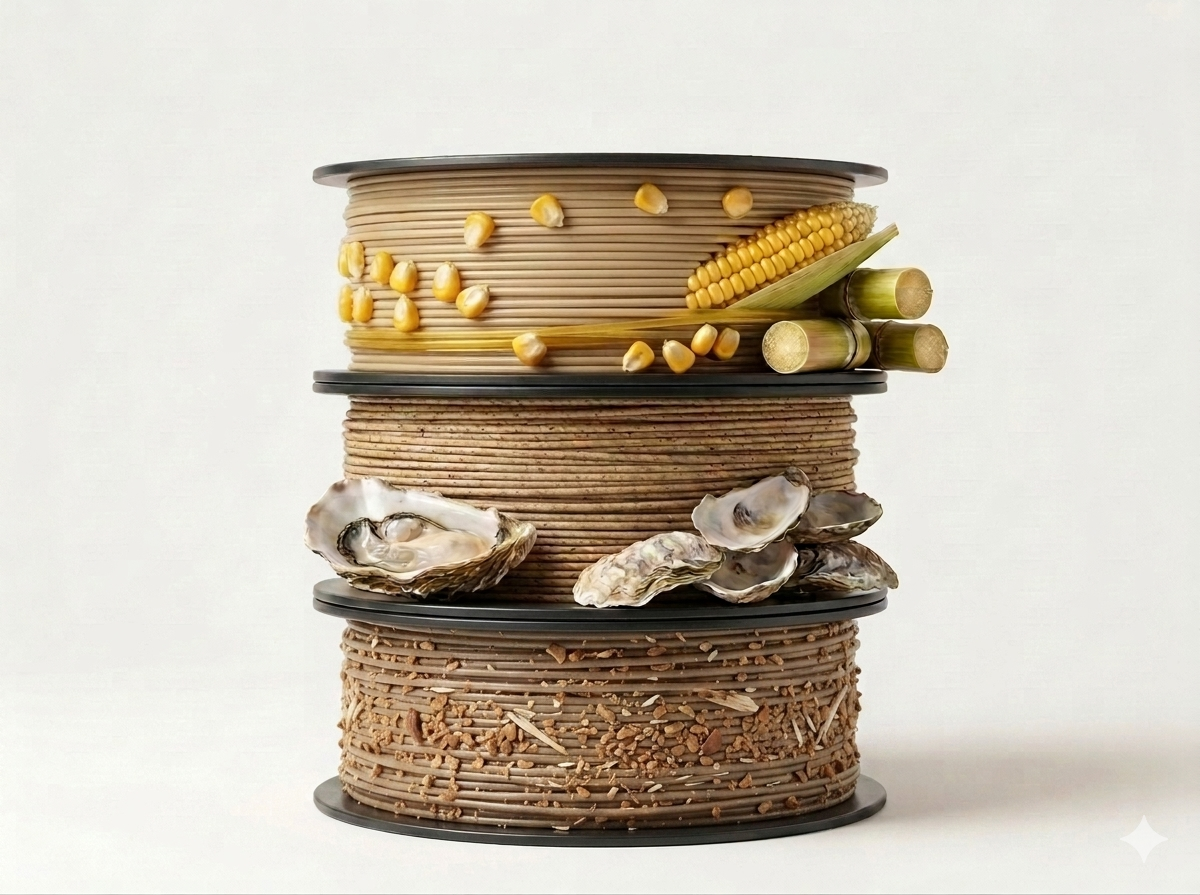
PLA (Polylactic Acid) is one of the most widely used materials in fashion prototyping.
Derived partly from renewable resources such as corn starch or sugarcane, it offers:
- light weight
- excellent detail
- easy printing
- reduced production waste
Its rigidity makes it ideal for sculptural accessories and architectural fashion pieces.
TPU
TPU (Thermoplastic Polyurethane) introduces flexibility into the equation.
Unlike PLA, TPU bends, stretches and adapts to movement.
This makes it particularly interesting for:
- wearable structures
- flexible accessories
- experimental garments
- body-responsive designs
Recycled Filaments
A growing number of manufacturers now offer recycled materials made from industrial waste or post-consumer plastics.
These materials contribute to a more circular approach to design while maintaining strong performance characteristics.
Why Material Choice Matters
A beautiful design is only as successful as the material that brings it to life.
The wrong filament can result in:
- discomfort
- fragility
- excessive weight
- poor durability
The right filament can transform an experimental concept into a wearable object.
As fashion increasingly explores additive manufacturing, material knowledge becomes just as important as design skills.
Towards Smarter Materials
Researchers and innovators are already experimenting with the next generation of fashion materials.
These include:
- bio-based filaments
- algae-derived materials
- conductive filaments
- responsive materials
- biodegradable alternatives
The goal is not simply to print fashion.
It is to create materials that are lighter, smarter, and more responsible.
The Future Is Material
Fashion innovation is often associated with technology.
Yet the true revolution may come from the materials themselves.
Tomorrow’s fashion will not only be designed differently.
It will be made differently.
And at the heart of that transformation lies a simple but powerful element:
the filament.