Your cart is currently empty.
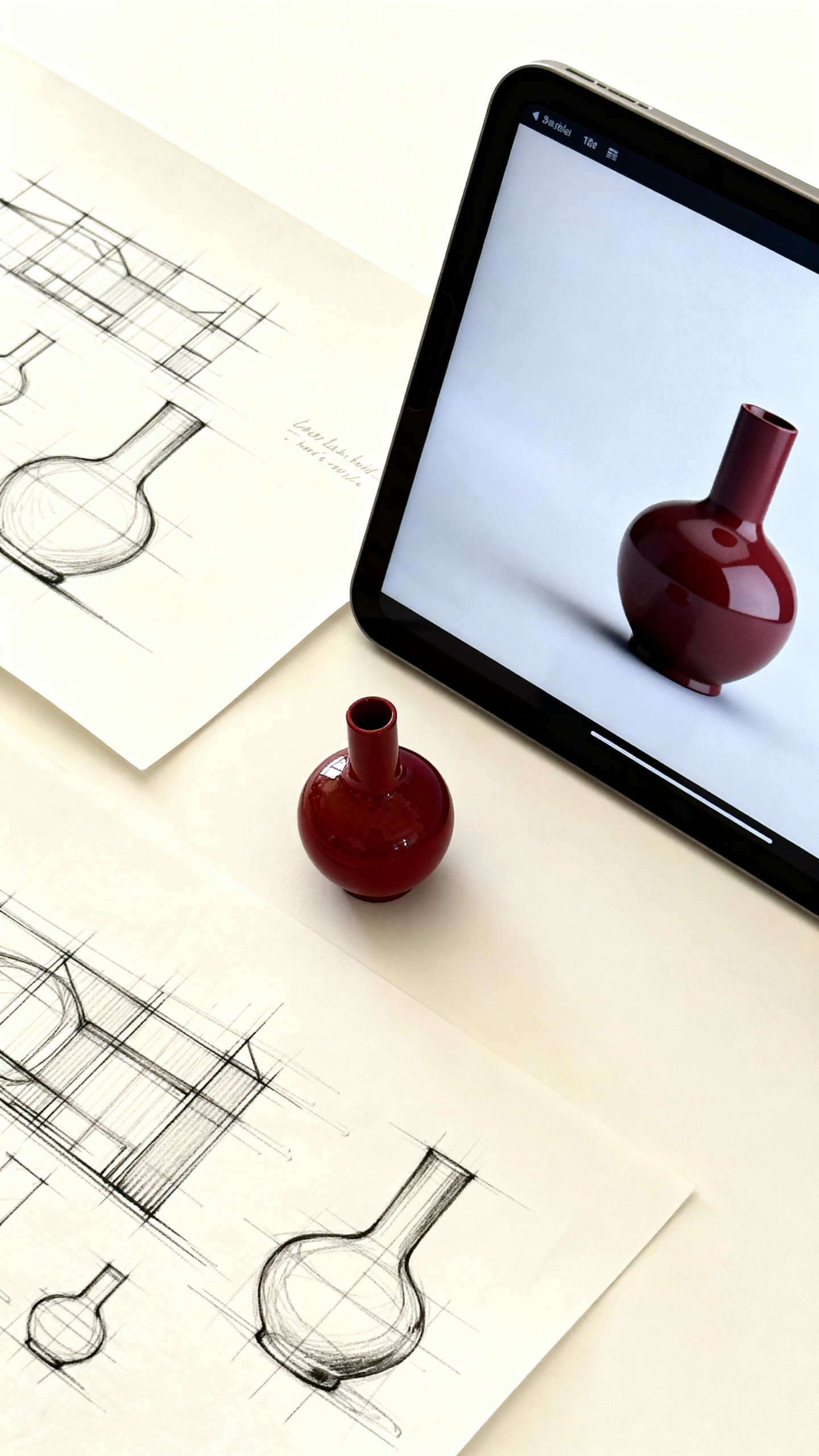
From Sketch to Object: The Digital Design Process
Every object begins with an idea.
A line on paper. A shape inspired by nature. A detail observed during a journey. Before becoming a tangible piece, every design starts as a concept waiting to take form.
Today, technology is transforming the way designers bring these ideas to life.
By combining creativity with digital tools, Fashion Tech allows concepts to evolve from sketches into physical objects with greater precision, flexibility, and creative freedom.
The Beginning: An Idea
The design process often starts long before any software is opened.
Inspiration can come from anywhere:
- Nature
- Architecture
- Art
- Cultural heritage
- Everyday observations
Designers collect references, experiment with forms, and explore visual directions through sketches and research.
At this stage, ideas remain fluid.
Nothing is fixed.
The goal is simply to explore possibilities.
From Paper to Digital Space
Once a direction emerges, the concept moves into a digital environment.
Using 3D modeling software, designers transform sketches into virtual objects.
Unlike traditional drawings, digital models allow creators to visualize a piece from every angle.
Dimensions, proportions, details, and structures can all be refined before production begins.
This stage offers a unique opportunity to experiment, adjust, and innovate without consuming physical materials.
Designing Without Limits
One of the most exciting aspects of digital design is the freedom it provides.
Complex geometries, organic structures, and intricate details that would be difficult to achieve through conventional manufacturing can be explored with greater ease.
Designers can test:
- Multiple variations
- Different proportions
- Structural performance
- Material possibilities
The digital environment becomes a creative laboratory where ideas evolve through experimentation.
Prototyping the Design
Before reaching its final form, a design is often tested through prototyping.
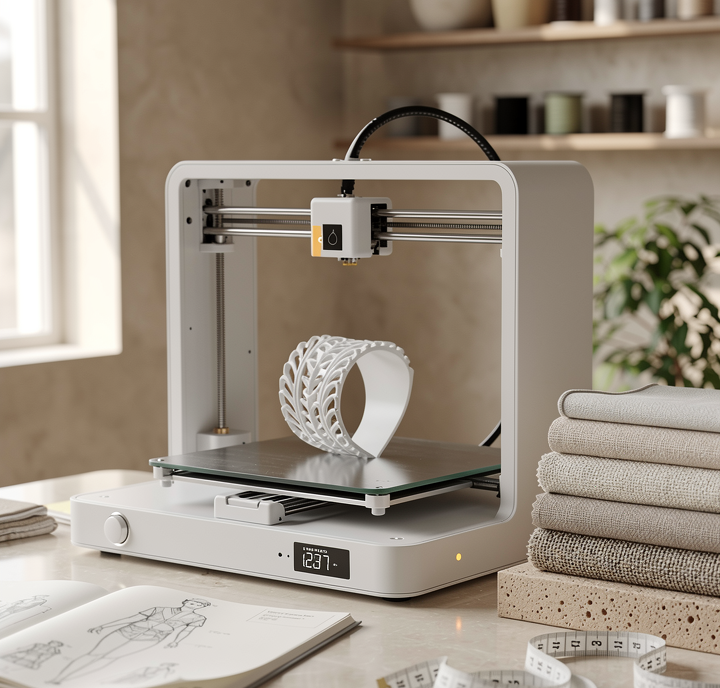
Digital files can be transformed into physical models using technologies such as 3D printing.
This allows designers to evaluate:
- Scale
- Comfort
- Functionality
- Visual impact
Prototypes provide valuable insights and help refine the design before final production.
The process becomes more efficient, reducing unnecessary material use while improving accuracy.
From Digital File to Physical Object
Once finalized, the design moves from the virtual world into reality.
Through additive manufacturing, the object is built layer by layer according to the digital model.
The transition from screen to object represents a unique moment in the design journey.
An idea that once existed only as a sketch becomes something tangible — something that can be seen, touched, and experienced.
A New Creative Workflow
Digital design is not replacing creativity.
It is expanding it.
By integrating technology into the design process, creators gain new tools to explore forms, materials, and possibilities that were previously difficult to achieve.
The result is a more flexible, efficient, and innovative approach to creation.
One where imagination remains at the center of the process.
Designing the Future
As technology continues to evolve, digital design is becoming an increasingly important part of contemporary fashion.
From concept development to production, it offers new ways to rethink how objects are imagined and made.
Yet despite all technological advances, the essence of design remains unchanged.
Every object still begins with an idea.
The tools may evolve.
The creative vision behind them remains timeless.